
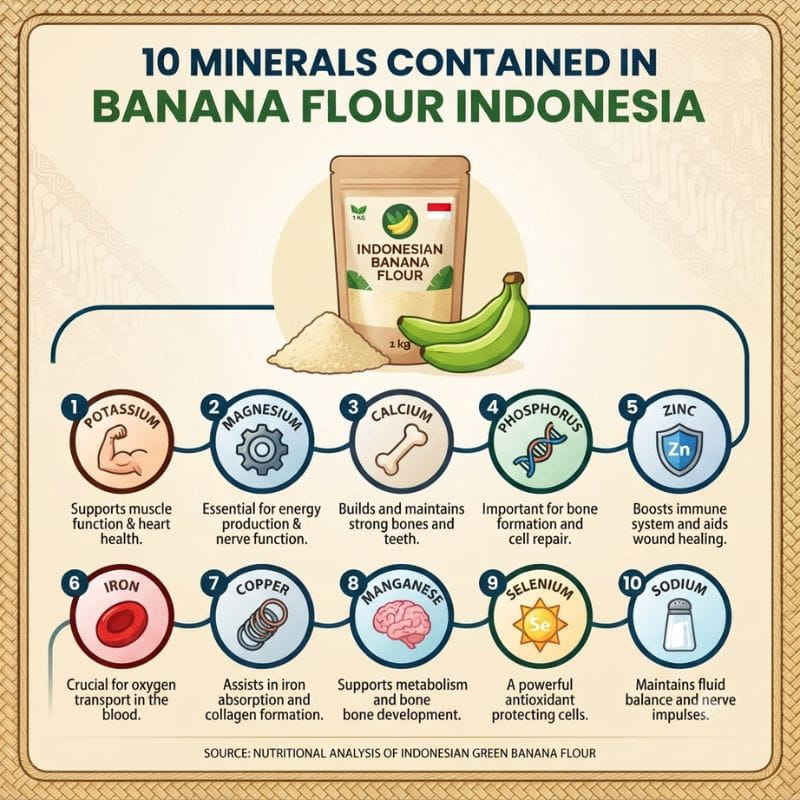
In recent years, the global food and beverage industry has experienced a monumental shift toward functional, allergen-friendly, and nutrient-dense alternative ingredients. Among these, banana flour has emerged as a premier superfood, particularly prized in specialized diets such as gluten-free formulations for individuals managing banana flour celiac disease restrictions.
Read More: 15 Benefits of Green Banana Flour Indonesia for Celiac Disease and Diabetes Mellitus
Sourced primarily from mature green dessert and cooking bananas, high-grade indonesian banana flour is celebrated not only for its exceptionally high resistant starch content but also for its remarkably diverse and robust micronutrient profile.
Operating at the forefront of this agricultural and manufacturing evolution, an established banana flour factory indonesia leverages rich volcanic soil. And year-round tropical sunlight to produce exceptional export-quality ingredients. As a trusted banana flour supplier indonesia, producers ensure that the natural mineral integrity of the raw fruit is meticulously preserved.
Through low-temperature milling and hygienic processing. This data-driven technical whitepaper explores the ten essential minerals naturally present in sustainably sourced banana flour. Detailing their biochemical functions, quantitative concentrations, and physiological significance in human nutrition.
Read More: Exploring Culinary Innovations: Recommended Foods Powered by Indonesian Banana Flour
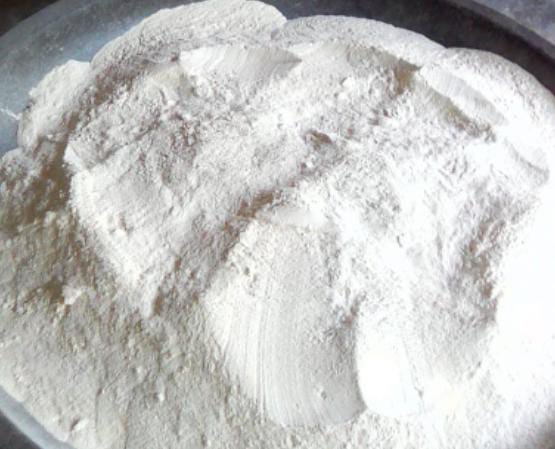
1. Potassium (K): The Electrolyte Powerhouse
Potassium is quantitatively the most abundant mineral found in green banana flour, establishing indonesian banana flour as a premier botanical source of this vital electrolyte. On average, high-purity flour derived from green Cavendish and Saba bananas contains approximately 1,400 to 1,500 mg of potassium per 100 grams of dry weight. Potassium acts as the primary intracellular cation.
By working in tandem with extracellular sodium to regulate osmotic balance, transmembrane resting potentials, and systemic neural transmission. Adequate dietary intake of potassium is clinically proven to mitigate the hypertensive effects of sodium by promoting renal excretion of excess ions and inducing vascular smooth muscle relaxation.
For industrial food manufacturers formulating functional foods, incorporating mineral-rich ingredients from a reliable banana flour supplier indonesia enhances the nutritional label profile without relying on synthetic fortification.
2. Banana Flour Indonesia Contains Magnesium (Mg): Cofactor for Enzymatic Vitality
Magnesium occupies a critical biochemical role, serving as an indispensable enzymatic cofactor for over 300 intracellular metabolic reactions, including oxidative phosphorylation, glycolysis, and the synthesis of deoxyribonucleic acid (DNA). Analytical assays of premium banana flour indicate a magnesium concentration ranging between 105 mg and 115 mg per 100 grams.
Individuals adhering to strict elimination diets or managing banana flour celiac disease protocols often face micronutrient deficiencies due to restricted grain intake; incorporating magnesium-dense green banana flour into daily baking bridges this nutritional gap efficiently.
3. Phosphorus (P): Structural Matrix and Energy Metabolism from Banana Flour Indonesia
Working synergistically with calcium, phosphorus is fundamental for the structural rigidity of bones and teeth, forming crystalline hydroxyapatite matrices. Furthermore, phosphorus is a primary constituent of phospholipids. With nucleic acids, and high-energy nucleotide phosphates like ATP. Laboratory testing of products originating from a certified banana flour factory indonesia reveals a phosphorus content averaging 100 mg to 110 mg per 100 grams.
This mineral concentration supports cellular signaling cascades, acid-base buffering systems, and optimal metabolic efficiency, making indonesian banana flour an exceptional functional additive for nutrient-dense endurance bars and specialized functional baked goods.
4. Banana Flour Indonesia Have Calcium (Ca): Skeletal Integrity and Signal Transduction
While dairy products traditionally dominate public discourse regarding calcium, plant-based alternatives like green banana flour contribute meaningful amounts of bioavailable calcium to human nutrition.
High-grade industrial samples yield between 15 mg and 25 mg of calcium per 100 grams. Calcium is universally recognized for its primary role in skeletal mineralization. But its physiological scope extends to secondary messenger systems, blood coagulation pathways, enzyme activation, and myocardial contraction coupling.
For populations avoiding dairy due to lactose intolerance or autoimmune disorders, integrating ingredients sourced directly from an experienced banana flour supplier indonesia provides a diversified mineral matrix.
5. Iron (Fe): Oxygen Transport and Hematopoiesis
Iron is an indispensable transition metal required for oxygen transport. Also for cellular respiration, and energy metabolism through its presence in hemoglobin, myoglobin, and various cytochromes. Green banana flour contains appreciable quantities of iron, typically measuring between 1.5 mg and 2.5 mg per 100 grams of dry matter.
Although non-heme iron derived from plant sources exhibits lower bioavailability than animal-derived heme iron, co-ingesting organic acids naturally present in functional diets enhances intestinal absorption.
The export standards maintained by a premier banana flour factory indonesia ensure strict sanitary milling parameters, preventing metallic contamination and preserving the native mineral composition.
6. Zinc (Zn): Immune Competence and Wound Healing
Zinc is a catalytic structural and regulatory ion involved in the optimal function of over 200 specific enzymes, governing DNA synthesis, immunological defense mechanisms, protein synthesis, and cellular division.
High-resolution spectroscopic analysis of indonesian banana flour demonstrates a zinc concentration of approximately 0.8 mg to 1.4 mg per 100 grams.
Adequate dietary zinc intake is particularly crucial for maintaining mucosal barrier integrity. And supporting rapid cellular turnover in the gastrointestinal tract. A clinical priority for individuals recovering from chronic inflammatory conditions or managing banana flour celiac disease enteropathy.
7. Copper (Cu): Redox Chemistry and Connective Tissue Synthesis
Copper functions as an essential cofactor for numerous cuproenzymes, including cytochrome c oxidase, lysyl oxidase, and superoxide dismutase. Which mediate cellular energy production, antioxidant defense against reactive oxygen species, and cross-linking of collagen and elastin.
Analytical data confirms that green banana flour contains roughly 0.15 mg to 0.25 mg of copper per 100 grams. This trace mineral works harmoniously with iron to facilitate proper red blood cell maturation and maintain structural stability across cardiovascular connective tissues.
8. Manganese (Mn): Antioxidant Defense and Bone Matrix Formation
Manganese acts both as an active enzymatic constituent and as an activator for arginase, glutamine synthetase, and mitochondrial superoxide dismutase (Mn-SOD), protecting cellular structures from oxidative stress.
Certified batches from a leading banana flour factory indonesia contain between 0.3 mg and 0.6 mg. Of manganese per 100 grams. This essential trace element supports amino acid metabolism, carbohydrate utilization, and proper skeletal development. Reinforcing the nutritional value of indonesian banana flour in modern commercial food formulations.
9. Sodium (Na) and Fluid Balance Regulation
Naturally occurring sodium exists in balanced equilibrium within whole-food matrices, serving alongside potassium to maintain cellular osmotic pressure, transmembrane electrochemical gradients, and systemic blood pressure homeostasis. Green banana flour naturally features a low baseline sodium concentration, generally ranging from 1 mg to 5 mg per 100 grams. This exceptionally low sodium-to-potassium ratio establishes banana flour as a heart-healthy ingredient ideal for formulating specialized therapeutic diets targeting cardiovascular wellness and hypertension management.
10. Selenium (Se): Thyroid Regulation and Enzymatic Protection
Present in trace amounts within volcanic soils of the Indonesian archipelago, selenium is incorporated into selenoproteins that regulate thyroid hormone metabolism, antioxidant defense networks, and immune function.
Advanced geological profiling of regions supporting a reputable banana flour supplier indonesia highlights trace selenium concentrations averaging 0.005 mg to 0.012 mg per 100 grams. Although required in minute quantities, selenium prevents cellular lipid peroxidation and supports overall systemic resilience.
| Mineral Element | Average Concentration (mg / 100g) | Primary Physiological Function |
| Potassium (K) | 1,400 – 1,500 mg | Electrolyte balance, fluid regulation, blood pressure control |
| Magnesium (Mg) | 105 – 115 mg | Enzymatic cofactor, ATP stabilization, muscle relaxation |
| Phosphorus (P) | 100 – 110 mg | Bone matrix mineralization, cellular energy transfer |
| Calcium (Ca) | 15 – 25 mg | Skeletal rigidity, nerve impulse transmission, muscle contraction |
| Iron (Fe) | 1.5 – 2.5 mg | Hemoglobin synthesis, systemic oxygen transportation |
| Zinc (Zn) | 0.8 – 1.4 mg | Immunological competence, wound healing, DNA synthesis |
| Copper (Cu) | 0.15 – 0.25 mg | Red blood cell formation, antioxidant enzyme defense |
| Manganese (Mn) | 0.3 – 0.6 mg | Cartilage synthesis, mitochondrial protection from oxidation |
| Sodium (Na) | 1 – 5 mg | Extracellular fluid regulation, nerve conduction |
| Selenium (Se) | 0.005 – 0.012 mg | Thyroid hormone activation, cellular antioxidant protection |
Clinical & Commercial Application Note: For food technologists, bakers, and product developers targeting global export markets, selecting an established banana flour factory indonesia ensures consistent mineral yields, superior resistant starch profiles, and rigorous quality assurance.
Secure Your Supply Today, Make an Inquiry here
Ultimately, banana flour indonesia continues to bridge the gap between traditional agricultural heritage and modern nutritional science, offering versatile applications across various global sectors.
Contact Us Today for a Wholesale Inquiry and Competitive Pricing
Leave a Reply